
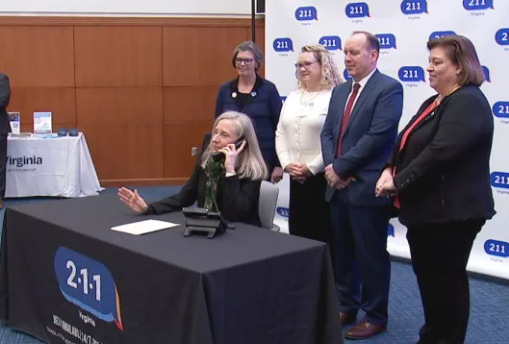
Virginia recently celebrated the 20th anniversary of 211 Virginia in Richmond. Gov. Abigail Spanberger joined Virginia Department of Social Services (VDSS) staff members and community advocates on Feb. 10 to mark the success of the free, 24-hour phone line which provides health and human services information.
In addition to Gov. Spanberger, the event was attended by VDSS Commissioner Duke Storen, VDSS Community and Volunteer Services Director Fran Inge, 211 Manager and Serve Virginia Director Kathy Spangler, VACAP Director Erik Johnston, OEO staff, and representatives from Lynchburg Community Action Group (LynCAG). 211 was praised for its role in helping connect Virginians with everyday services, as well as being a critical tool during emergencies and disasters.
“Two-one-one is a resource for so many of our neighbors who are struggling, who are facing challenges, whether rising costs are essential to their challenges or something else,” Gov. Spanberger said.
“It’s really connecting people with the information they need to get the services at the moment and time where they need them most,” said Duke Storen, the VDSS commissioner. “Every day in times of emergency, in times of reflection and need of individuals’ families, 211 answers that call.”
Gov. Spanberger spoke with Rita Ramos, a woman who has worked with 211 Virginia for more than a year, over the phone. Ramos serves as a community resource specialist and answers thousands of calls from Virginians via inbound calls, texts or chats.
“One of my most memorable calls involving someone spiraling into a mental health crisis who was extremely distressed when they first reached me,” Ramos told Spanberger. “I focused on staying calm with the caller, listening without interrupting, validating their feelings and slowing the conversation down so she could breathe and feel safe. Because she was overwhelmed at that time.”
According to Spanberger, 211 has been active or on alert 38 times, working closely with the Virginia Department of Emergency Management (VDEM) and the governor’s office since 2014. After Hurricane Helene, 211 became only the second 211 system in the nation to provide FEMA-funded early disaster case management across 18 localities, along with VDEM, Spanberger said.
In addition to Gov. Spanberger, the event was attended by VDSS Commissioner Duke Storen, VDSS Community and Volunteer Services Director Fran Inge, 211 Manager and Serve Virginia Director Kathy Spangler, VACAP Director Erik Johnston, OEO staff, and representatives from Lynchburg Community Action Group (LynCAG). 211 was praised for its role in helping connect Virginians with everyday services, as well as being a critical tool during emergencies and disasters.
“Two-one-one is a resource for so many of our neighbors who are struggling, who are facing challenges, whether rising costs are essential to their challenges or something else,” Gov. Spanberger said.
“It’s really connecting people with the information they need to get the services at the moment and time where they need them most,” said Duke Storen, the VDSS commissioner. “Every day in times of emergency, in times of reflection and need of individuals’ families, 211 answers that call.”
Gov. Spanberger spoke with Rita Ramos, a woman who has worked with 211 Virginia for more than a year, over the phone. Ramos serves as a community resource specialist and answers thousands of calls from Virginians via inbound calls, texts or chats.
“One of my most memorable calls involving someone spiraling into a mental health crisis who was extremely distressed when they first reached me,” Ramos told Spanberger. “I focused on staying calm with the caller, listening without interrupting, validating their feelings and slowing the conversation down so she could breathe and feel safe. Because she was overwhelmed at that time.”
According to Spanberger, 211 has been active or on alert 38 times, working closely with the Virginia Department of Emergency Management (VDEM) and the governor’s office since 2014. After Hurricane Helene, 211 became only the second 211 system in the nation to provide FEMA-funded early disaster case management across 18 localities, along with VDEM, Spanberger said.